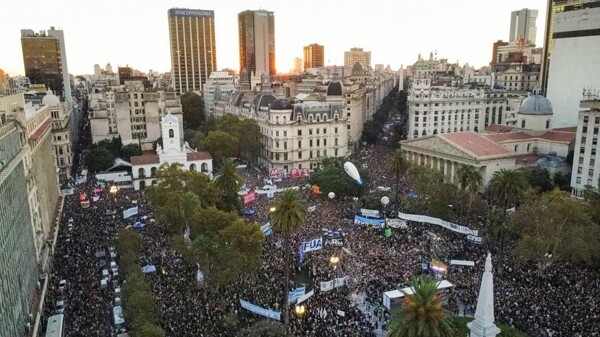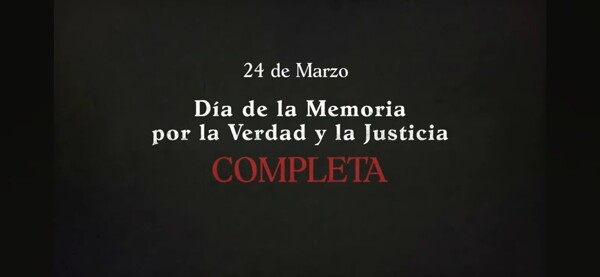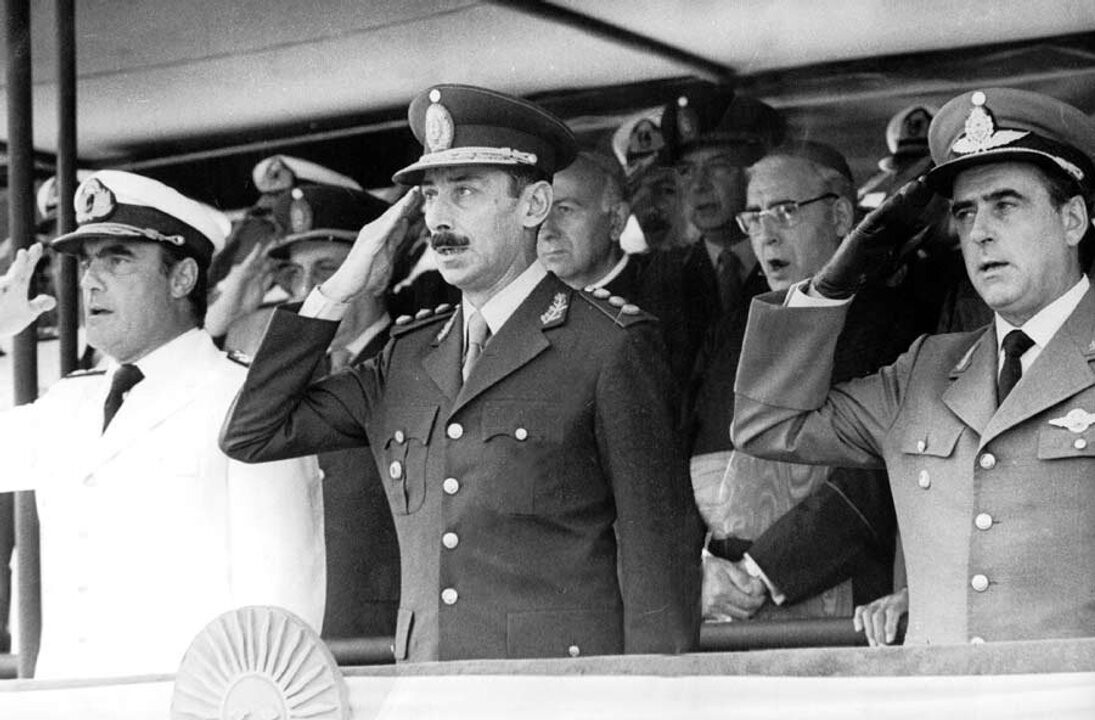
The commemoration of the 50th anniversary of the last military dictatorship is a mandatory milestone to analyze not only the events that occurred but also their future repercussions, because the number of missing and appropriated men, women, and children remains an open wound. In a dialogue with the Argentine News Agency (NA), historians Camila Perochena and Felipe Pigna analyzed the importance of the Day of Memory, Truth and Justice and the government's stance of promoting a "complete history." According to Perochena, March 24th is centrally important because it first allows us to remember and make memory of the crimes and human rights violations that happened in our country, and it is also a date to "revalue the importance and defense of a democratic regime" in Argentina. "This day allows us to think about and process the traumas of our past. On the one hand, with the Alfonsinist narrative regarding the idea that democracy requires justice and that it was necessary to judge the military who violated human rights. On the other hand, it simultaneously debates with Kirchnerism a central point, which is the role of armed organizations prior to the dictatorship. It ignored the law in general, but even more so human rights," she explained. Regarding the position taken by President Javier Milei's administration to "tell the complete history," both historians agreed that with this discourse, they seek to "minimize state violence" because they practically do not refer to "the atrocities of the dictatorship." For Perochena, the government shows a willingness to "open battles over the past" because this "new right," unlike others, "believes it must wage a cultural battle," and that of the '70s and the last military dictatorship is one of them. "They have a strong deficit in telling what happened during the last coup d'état," she added. "Suppose they want to talk about the crimes of the guerrilla, what happened before (the military took power). What there is is a complaint not against state violence, but basically against the violence of armed organizations. They are minimizing state violence," she stated. From his perspective, Pigna assured that the government proposes "a partial history" where it seeks to highlight "a part" of the history, because they "completely partialize it." "They are looking for it in opposition to Kirchnerism," he added. "When they talk about telling the complete history, what they are doing is opposing the way the last military dictatorship was narrated in the 70s, during the Kirchnerist government. It has to be told, of course. So there is a debate that the government maintains with two moments. Today there is no complete history in the official narrative," Pigna concluded.